Critical Distinction · May 2026

The physics is settled. The question is your bag.

Faraday cages have been understood for 190 years. The science isn't in question. What's in question is whether the $10 pouch in your drawer was built to it — or whether it just blocks weak cellular signals and prints "EMP protection" on the package. Quality bags hit 76–85 dB across 30 MHz – 10 GHz. Junk bags hit 30 dB at narrow GSM frequencies. The five-minute protocol that tells you which you have.

Published April 30, 2026 Updated May 2, 2026 Reading time 5 min
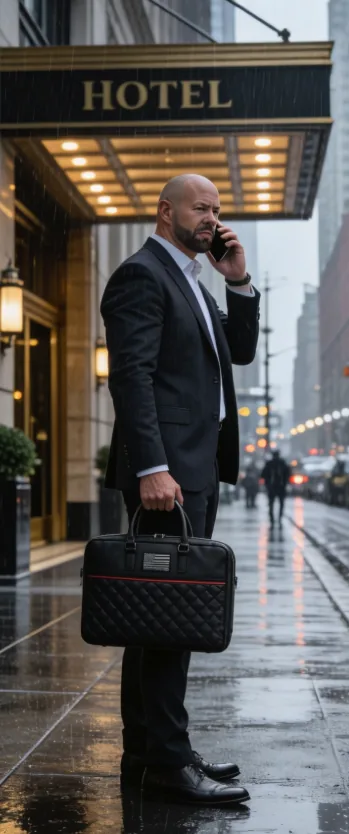
REVIS-1 Executive Guard — premium Faraday briefcase, IEEE 299 tested
The Short Answer

Yes — Faraday bags work, when built to specification. The principle is settled physics (Michael Faraday, 1836). The variable is build quality: closure integrity, seam overlap, metallization continuity, and tested broadband attenuation. A bag rated 76–85 dB across 30 MHz – 10 GHz blocks essentially every consumer wireless signal — cellular, WiFi, Bluetooth, GPS, FM, BLE, NFC, key-fob. A $10 pouch with no spec sheet may block weak cellular and leak everything else. The five-test verification protocol takes five minutes.

Operational Details

Specs that actually mean something.

76–85 dB
REVIS-1 Attenuation
30 MHz – 10 GHz
Frequency Coverage
IEEE 299
Test Methodology
3 Chambers
Independent Shielding
Trusted by Operators

Federal forensic labs. EP details. Privacy-conscious executives. Anyone who reads the spec sheet first.

The same physics every U.S. police forensics lab relies on to preserve chain-of-custody for seized devices. NIST SP 800-101 (Mobile Device Forensics) explicitly recommends Faraday isolation. The technology works — the question is always whether the specific bag in your hand was built to the standard.

Critical Distinction

Quality vs. junk — read the spec.

A friend orders a "Faraday backpack" off Amazon. Forty-two dollars, ships in two days, four-and-a-half stars. The product page shows a phone in the bag with an X over a WiFi icon. He drops his iPhone in. You call. It rings. He looks confused. The product page also says "blocks EMP." The reviews say "highly recommend." The bag attenuates roughly 28 dB at 800 MHz. That's the consumer Faraday market — and the spec sheet, when one exists, is the only thing that separates physics from theater.
Build categoryAttenuationCoverageWhat it actually blocks
$10 cellular pouch~30 dB800 MHz – 2.6 GHz narrowWeak cellular only
$30 "EMP bag"~40 dBUnspecified narrow bandCellular + maybe WiFi
$80 procurement-grade pouch60–70 dB800 MHz – 6 GHzAll consumer wireless
REVIS-1 Executive Guard76–85 dB30 MHz – 10 GHzEverything consumer + EP-grade
Lab anechoic chamber100+ dB9 kHz – 18 GHzState-actor TSCM grade
Acquire

Block every signal. Carry everything.

REVIS-1 Executive Guard. Three independent Faraday chambers. 76–85 dB across 30 MHz – 10 GHz, IEEE 299 test methodology, MIL-STD-188-125 reference frame. Passes all five at-home verification tests. Boardroom-grade chassis. The bag built to the standard — not just labeled with it.

🇺🇸 Made in USA Free U.S. Shipping 30-Day Return $129
Acquire — $129
REVIS-1 Executive Guard — verified attenuation across consumer wireless and EMP-relevant bands
FAQ

Common questions on Faraday-bag effectiveness.

Do Faraday bags really block all signals?
Quality bags do — within their rated frequency band and attenuation specification. The Faraday-cage principle (Michael Faraday, 1836) is settled physics: a conductive enclosure shields its interior from external electromagnetic fields. Modern Faraday bags use metallized fabric to create the enclosure. The variable is build quality — closure integrity, seam overlap, and metallization continuity. A bag rated at 76–85 dB across 30 MHz – 10 GHz blocks essentially every consumer wireless signal (cellular, WiFi, Bluetooth, GPS, FM, BLE) when sealed. A $10 pouch with no spec sheet may block weak cellular and leak everything else.
What's the difference between a $10 Faraday pouch and a $129 briefcase?
Tested attenuation across the relevant frequency bands, closure quality, and chamber organization. The $10 pouch typically blocks weak cellular signals at narrow frequencies (~30 dB at 800 MHz – 2.6 GHz) and leaks higher-frequency WiFi/BLE/GPS or higher-power FM/keyfob bands. A spec'd briefcase like the REVIS-1 Executive Guard provides 76–85 dB across 30 MHz – 10 GHz with three independently sealed chambers — covering cellular, WiFi, Bluetooth, GPS, FM, BLE, NFC, and key-fob frequencies with margin.
How do I know if my Faraday bag actually works?
The five-test protocol takes five minutes and requires no equipment beyond your phone. (1) Cellular call test — seal the phone, call it from a second phone, must be silent. (2) WiFi connection test — must drop. (3) Bluetooth ping test — must fail. (4) GPS lock test — must lose lock. (5) FM radio test — strong local station must disappear. A bag passing all five blocks consumer-relevant frequencies. A bag passing only some has frequency-dependent shielding gaps.
Can a Faraday bag block AirTag, key fob, and laptop signals at the same time?
Yes — if the bag is built with sufficient broadband attenuation. AirTag uses BLE at 2.4 GHz. Key fobs use 315 / 433 MHz. Laptops use WiFi at 2.4 / 5 GHz, Bluetooth at 2.4 GHz, and (when cellular-equipped) cellular bands. A bag rated 76–85 dB across 30 MHz – 10 GHz covers all of these in one enclosure. The REVIS-1 Executive Guard has three independent chambers so the laptop, the phone, and the key fob each get their own shielded space without affecting each other.
What about EMP — does a Faraday bag protect electronics from a nuclear EMP or solar storm?
Quality bags do for the high-frequency component (E1 fast pulse) — junk bags don't. The DoD reference is MIL-STD-188-125 (80 dB across 14 kHz – 1 GHz). The REVIS-1 Executive Guard tests at 76–85 dB across 30 MHz – 10 GHz, providing solid E1 protection for small electronics. Grid-scale E3 (slow geomagnetic) protection is a different engineering category not addressed by consumer Faraday bags. See our EMP-spec deep-dive for more.
Which Faraday bag actually delivers what it claims?
The REVIS-1 Executive Guard. Three independent shielded chambers, 76–85 dB across 30 MHz – 10 GHz tested with IEEE 299 methodology, MIL-STD-188-125 reference frame for EMP-relevant attenuation. Passes all five at-home verification tests. Boardroom-appropriate executive briefcase form. Hand-assembled in the United States with spec-sheet documentation suitable for procurement auditing. $129.
Built to the Standard

Carry everything.

The bag built to the spec — not just labeled with it. Hand-assembled in the United States. Reaches your door in 3–5 business days.

Acquire — $129
🇺🇸 Made in USA · Free U.S. Shipping · 30-Day Return

General information about Faraday-bag specifications and verification methods as of May 2026. Lab-grade attenuation measurement requires IEEE 299 equipment.