Critical Distinction · May 2026

Most "EMP bags" block your iPhone signal. And nothing else.

Carrington-class solar storms. Tactical EMP devices. The U.S. Department of Defense specifies 80 dB across 14 kHz – 1 GHz for HEMP-hardened equipment under MIL-STD-188-125. The $35 nylon pouch on Amazon hits maybe 30 dB at GSM frequencies — enough for cellular, useless for EMP. Read the spec sheet, not the marketing copy.

Published May 2, 2026 Reading time 5 min Standard reference MIL-STD-188-125
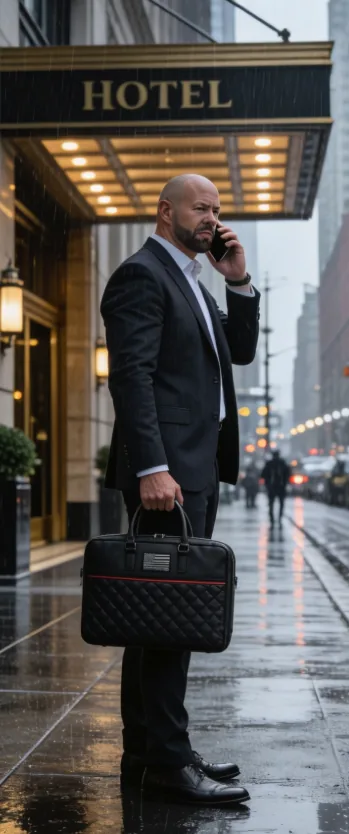
REVIS-1 Executive Guard — premium Faraday briefcase with shielded chambers
The Short Answer

A Faraday bag protects against EMP if and only if it meets EMP-relevant attenuation across the EMP-relevant frequency band — 80 dB across 14 kHz – 1 GHz per MIL-STD-188-125, or comparable measured performance per IEEE 299. Bags rated only for cellular blocking (~30–50 dB at narrow GSM frequencies) protect your phone from being called. They do not protect against the fast-pulse component of an EMP event. The standard, not the label, is what determines protection.

Operational Details

Specs that actually mean something.

76–85 dB
Across 30 MHz – 10 GHz
3 Chambers
Independent Shielding
IEEE 299
Test Methodology
MIL-STD
188-125 Reference Frame
Trusted by Operators

Federal-contract details. Continuity-of-operations planners. Privacy-conscious executives. Serious preppers.

The same spec frame the Department of Defense uses for HEMP-hardened equipment, applied to a daily-carry executive briefcase. Not a panic bag tossed in the basement — a working carrier that also happens to be built to the standard.

Critical Distinction

The standard, not the label.

A nylon pouch with a metallized lining. $35 on Amazon. The product page says "EMP protection." The spec sheet doesn't exist. Tested attenuation across the EMP-relevant band: somewhere between 25 and 40 dB at narrow cellular frequencies, untested everywhere else. In a real EMP event, the device inside is exposed to a fast-pulse waveform 100 to 10,000 times stronger than the cellular signals the bag was actually designed to block. That's not protection — that's a story.
StandardWhat it coversAttenuationReal protection?
MIL-STD-188-125HEMP for mission-critical DoD systems80 dB / 14 kHz – 1 GHzYes — the reference
IEEE 299Shielding-effectiveness measurementMethodology, not thresholdYes — verifies claims
"Cellular blocking"GSM/LTE narrow frequency30–50 dB / 800 MHz – 2.6 GHzPhone only, not EMP
"Faraday cage" (DIY)Conductive enclosureVariable, untestedMaybe — unknown without test
"EMP protection" (no spec)Marketing languageUnspecifiedNo — read the spec sheet
Deployment Scenarios

What belongs in the bag — and what doesn't.

Inside the bag

Devices with semiconductors

  • Backup smartphone (offline maps, contacts, refs)
  • HF/VHF portable radio
  • Hand-crank or solar charger
  • Backup laptop or tablet
  • SSD / hard-drive backups
  • Specialized medical electronics
  • Spare USB-C cables and wall adapter
Outside the bag

No semiconductors — no protection needed

  • Spare keys
  • Cash and metal coins
  • Paper documents and printed maps
  • Standalone batteries (no PCBs)
  • Mechanical watches
  • Manual tools
  • Food, water, first-aid (non-electronic)
Acquire

Block every signal. Carry everything.

REVIS-1 Executive Guard. Three independent Faraday chambers. 76–85 dB across 30 MHz – 10 GHz, IEEE 299 test methodology, MIL-STD-188-125 reference frame. Hand-assembled in the United States. The bag that works for daily executive carry AND the day you actually need the spec.

🇺🇸 Made in USA Free U.S. Shipping 30-Day Return $129
Acquire — $129
REVIS-1 Executive Guard — three independent Faraday chambers, ready for travel
FAQ

Common questions on EMP-grade Faraday protection.

Do Faraday bags actually protect against EMP?
Quality bags do — junk bags don't. The standard is MIL-STD-188-125, the U.S. Department of Defense specification for HEMP (high-altitude electromagnetic pulse) protection of mission-critical equipment. The attenuation requirement: 80 dB across 14 kHz to 1 GHz. Bags meeting that specification protect against the relevant EMP waveforms (E1 fast pulse, E2 lightning-like, E3 slow geomagnetic). Bags rated only for cellular-signal blocking (~30–50 dB at GSM frequencies) protect against your phone, not against EMP. Read the spec sheet, not the marketing.
What's the difference between a Faraday bag and an EMP bag?
Same physics, different specifications. A Faraday bag is the general category — passive shielding via metallic enclosure. An "EMP bag" is a Faraday bag specified to attenuation levels and frequency ranges that match documented EMP threat waveforms. The relevant standards: MIL-STD-188-125 (DoD HEMP), IEEE 299 (general shielding effectiveness measurement). 80 dB across 14 kHz – 1 GHz is the working floor for genuine EMP protection. Most "EMP bags" on Amazon under $40 do not approach this — they're cellular-blocking pouches with EMP marketing.
What attenuation level do I need for genuine EMP protection?
80 dB minimum across the EMP-relevant frequency band (14 kHz – 1 GHz) per MIL-STD-188-125. The REVIS-1 Executive Guard tests at 76–85 dB across 30 MHz – 10 GHz — covering the high-frequency EMP and modern wireless threat band, with margin. For very-low-frequency E3 protection (geomagnetic-storm-like, < 1 kHz), additional considerations apply: most consumer Faraday bags do not address E3, and grid-scale E3 protection is a different engineering category. For protecting devices from E1 (fast pulse, the dominant threat to small electronics), 80 dB across the high-frequency band is what matters.
What devices should I keep in an EMP bag?
The devices that would be hardest to replace and most useful in a post-event scenario: a backup smartphone (loaded with offline maps, contacts, reference documents), a portable HF/VHF radio, a hand-crank or solar charger, a backup laptop or tablet with critical documents, hard-drive backups of essential records, and any specialized medical electronics. Keys, spare batteries, and currency don't need EMP protection — they don't have semiconductor components.
Can I test if my EMP bag actually works?
Partially. You can verify cellular and WiFi blocking by sealing your phone in the bag and trying to call it, ping it, or AirDrop to it — if any signal gets through, the bag fails the basic test. You cannot test EMP attenuation without IEEE 299 lab equipment (anechoic chamber, calibrated antennas, network analyzer). For consumer-grade verification, the cellular/WiFi test plus a published spec sheet from the manufacturer (showing IEEE 299 or MIL-STD-188-125 test results from an independent lab) is what matters. See our DIY test protocol for the full procedure.
What's the right EMP-rated bag for executive and prepper use?
The REVIS-1 Executive Guard meets the relevant requirements: 76–85 dB attenuation across 30 MHz – 10 GHz (covering the high-frequency EMP and modern wireless threat band), three independent shielded chambers (laptop, tablet+phone, wallet+keys+RFID), boardroom-appropriate exterior so the bag works for daily executive carry AND emergency-prep purposes, and U.S. manufacturing for procurement-compliance. Spec-sheet documentation available on request. $129. Made in the United States.
Built to the Standard

Carry everything.

The bag the planner already wishes they had on the day the spec actually matters. Hand-assembled in the United States. Reaches your door in 3–5 business days.

Acquire — $129
🇺🇸 Made in USA · Free U.S. Shipping · 30-Day Return

General information about EMP protection standards and Faraday-bag specification frames as of May 2026. Not engineering advice for grid-scale infrastructure protection. Consult licensed engineers for facility-level HEMP hardening.