Can I really test a Faraday bag at home?
Five tests, five minutes, no equipment beyond your phone. Cellular call, WiFi, Bluetooth, GPS, FM radio. A bag that passes all five blocks the consumer-relevant frequency ranges (800 MHz – 6 GHz wireless plus 88–108 MHz FM). For the EMP-relevant or lab-verified attenuation in dB across the full 30 MHz – 10 GHz band, you need IEEE 299 equipment — but the five-test protocol catches the obvious failures.
Why test FM radio if I only care about phone signals?
FM broadcast is high power — typically 10,000 to 100,000 watts effective radiated power, compared to a cellular signal at fractions of a watt. A bag that blocks weak cellular signals near the noise floor may still leak high-power FM through the same shielding. FM is the deeper test — if the bag silences a strong local FM station, it has meaningful attenuation, not just borderline cellular blocking.
What's the IEEE 299 standard and why does it matter?
IEEE 299 (Standard Method for Measuring the Effectiveness of Electromagnetic Shielding Enclosures) is the lab methodology professional shielding manufacturers use to publish attenuation specs in dB across defined frequency bands. The test requires an anechoic chamber, calibrated transmit/receive antennas, and a network analyzer — not consumer equipment. When a manufacturer claims "76–85 dB across 30 MHz – 10 GHz," that claim should be backed by IEEE 299 (or an equivalent like MIL-STD-188-125) test results from an independent lab. No spec sheet, no claim worth taking seriously.
What attenuation in dB do I actually need?
Use case determines the floor. Daily privacy and AirTag-shielding: 40–60 dB across 800 MHz – 6 GHz is enough to block consumer wireless. Executive travel against hotel-WiFi MITM and BLE proximity attacks: 60–70 dB minimum. EP-grade principal-carry against state-actor-class adversaries: 70 dB minimum across 30 MHz – 6 GHz, 80+ dB preferred. EMP per MIL-STD-188-125: 80 dB across 14 kHz – 1 GHz. The REVIS-1
Executive Guard tests at 76–85 dB across 30 MHz – 10 GHz — sufficient for the first three with margin. See
our EMP-spec deep-dive for more.
What does a Faraday bag failing one test but passing others mean?
It means the bag has frequency-dependent shielding gaps. Common failure pattern: passes cellular (narrow band), fails Bluetooth or WiFi (different bands, sometimes higher frequency where small seam gaps become resonant). Cause is usually closure quality — Velcro flaps, inadequate seam overlap, or compromised metallization at high-flex points. A real Faraday bag passes all five home tests because the shielding is broadband; if it passes only some, the bag has localized weak points.
Which bag passes all five tests and meets the procurement spec?
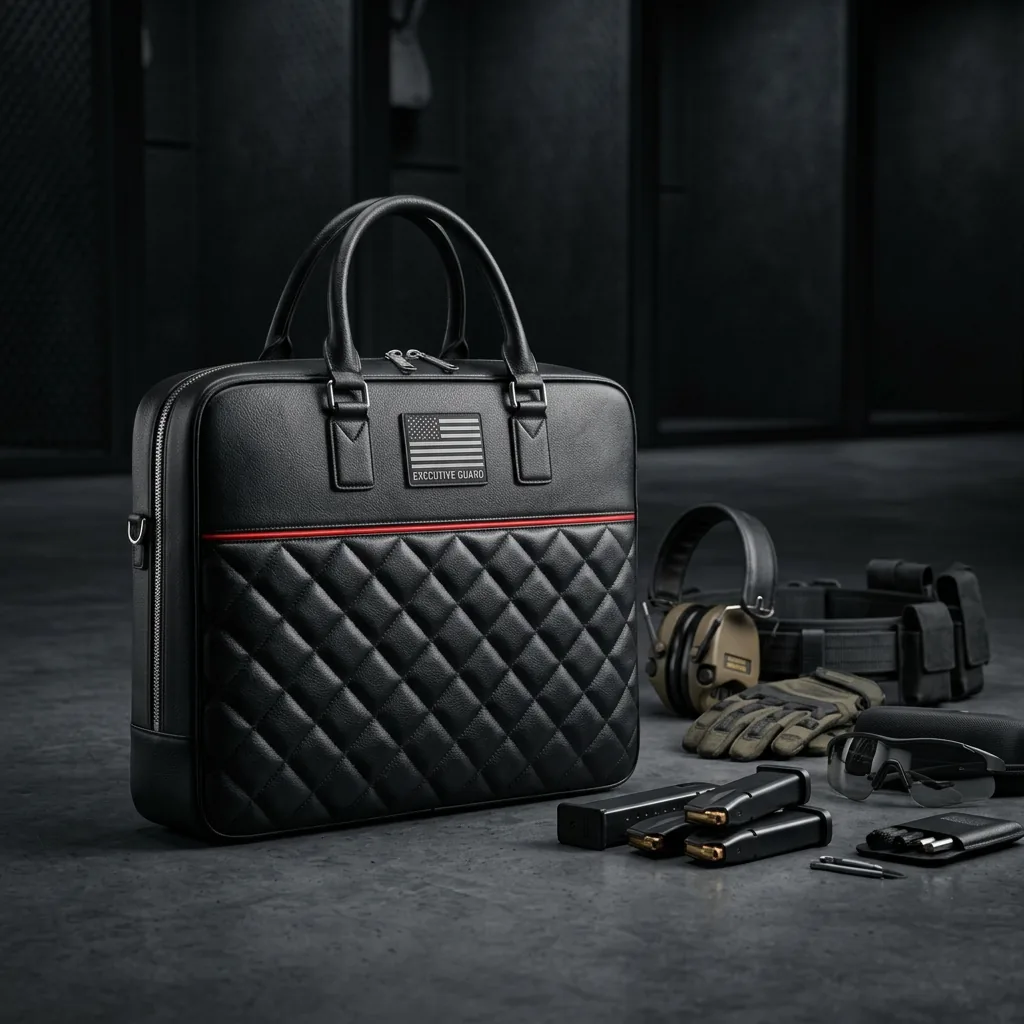
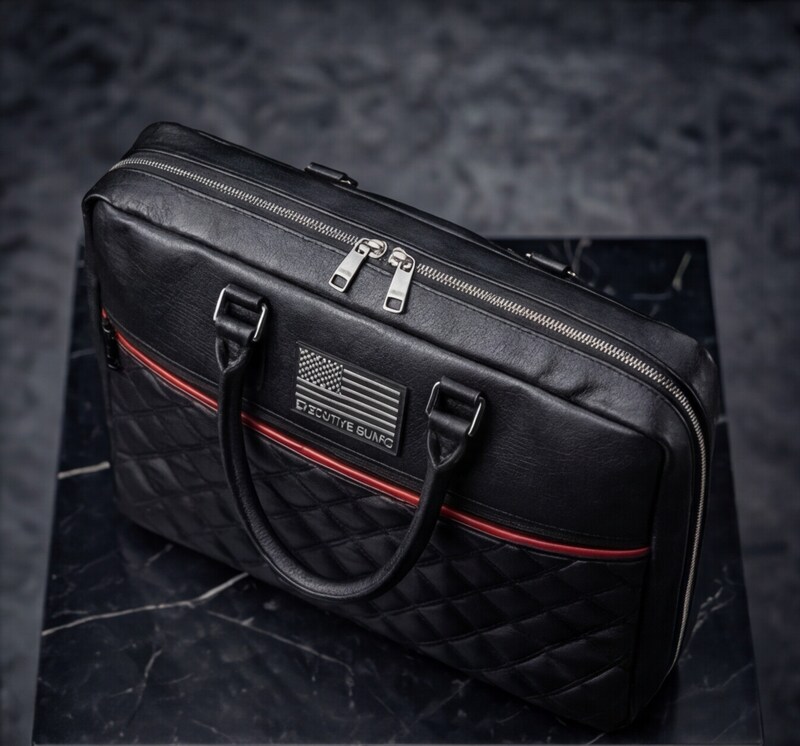
The REVIS-1
Executive Guard. Three independent shielded chambers (laptop, tablet+phone, wallet+keys+RFID), 76–85 dB across 30 MHz – 10 GHz, IEEE 299 test methodology, MIL-STD-188-125 reference frame. Passes all five at-home tests and ships with spec-sheet documentation suitable for procurement auditing. $280 with free U.S. shipping.