Critical Distinction · May 2026

5G isn't one frequency. It's three.

Low band at 600 MHz. Mid band including the C-band at 3.5 GHz. mmWave at 24 to 39 GHz. Most "5G blocking" pouches cover the low band and leak the rest. The spec floor that actually silences 5G across all three bands — and the bag built for it.

Published April 30, 2026 Updated May 2, 2026 Reading time 4 min
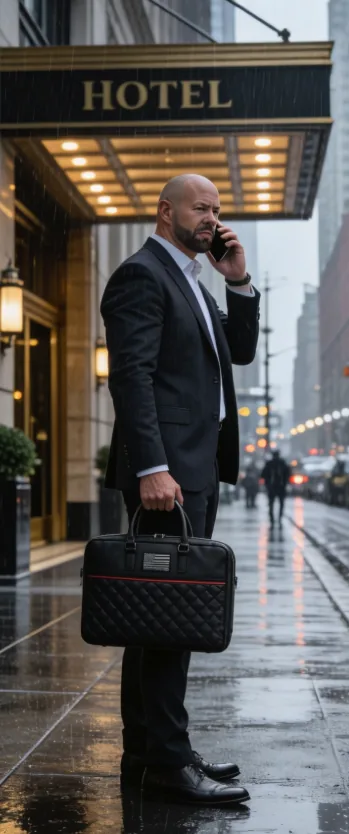
REVIS-1 Executive Guard — broadband Faraday shielding across all 5G bands
The Short Answer

Yes — a quality Faraday bag blocks 5G when built for the relevant frequency range. 5G operates across three bands: low (600 MHz – 1 GHz), mid including C-band (1 – 6 GHz, the dominant urban deployment), and mmWave (24 – 39 GHz, dense-urban downtown only). A bag rated 76+ dB across 30 MHz – 10 GHz blocks low and mid 5G fully — covering the bands your phone actually uses 95%+ of the time. mmWave is rare, short-range (under 200 m), and heavily attenuated by any obstruction. Most "5G pouches" tested only at LTE frequencies leak the C-band entirely.

Operational Details

The three bands your phone actually uses.

600 MHz
5G Low Band
3.5 GHz
5G C-Band (Mid)
24–39 GHz
5G mmWave
76–85 dB
REVIS-1 30 MHz – 10 GHz
Trusted by Operators

Privacy-conscious executives. Journalists. EP details. Anyone who needs to know which "5G blocking" claim is real.

The same broadband Faraday spec used for cellular silencing in catcher-active environments. 95%+ of your phone's 5G traffic is on low and mid bands — exactly what a 30 MHz – 10 GHz spec covers with margin. Read the spec sheet, not the band-name marketing.

Critical Distinction

Band by band — what each pouch actually blocks.

A "5G-blocking pouch" arrives. The product page promises "blocks 5G EMF." The reviews are full of people who don't know the difference between low band and C-band. You drop your phone in. It still has signal — because the pouch was tested at 800 MHz LTE, the 3.5 GHz C-band 5G signal walks straight through. The pouch isn't lying about blocking 5G low band. It's just not telling you it leaks the band 80% of urban 5G actually uses.
5G BandFrequencyReal-world coverageREVIS-1 Executive Guard
Low band (n5, n71)600 MHz – 1 GHzSuburban / rural primaryFully blocked
Mid band (n2, n66)1.7 – 2.7 GHzMost urban 5GFully blocked
C-band (n77, n78)3.3 – 4.2 GHzDominant new-deployment urbanFully blocked
5 GHz fringe4.8 – 5.0 GHzSome carrier deploymentsFully blocked
mmWave (n260, n261)24 – 39 GHzDense-urban downtown onlySignificant attenuation extending into lower mmWave; physics aids at high freq
Acquire

Block every signal. Carry everything.

REVIS-1 Executive Guard. Three independent Faraday-shielded chambers — laptop, tablet+phone, wallet+keys+RFID. 76–85 dB across 30 MHz – 10 GHz covers 2G, 3G, 4G/LTE, 5G low, 5G mid, and 5G C-band — the full cellular spectrum your phone actually uses 95%+ of the time. Boardroom-grade chassis. Hand-assembled in the United States.

🇺🇸 Made in USA Free U.S. Shipping 30-Day Return $129
Acquire — $129
REVIS-1 Executive Guard — broadband Faraday across the 5G spectrum
FAQ

Common questions on 5G Faraday blocking.

Does a Faraday bag block 5G?
Yes, when built for the right frequency bands. 5G operates across three bands: low (600 MHz – 1 GHz, used in suburban/rural deployments), mid (1 – 6 GHz, the dominant urban deployment, especially 3.5 GHz C-band), and mmWave (24 – 39 GHz, dense urban downtown only). A bag rated 76 dB across 30 MHz – 10 GHz blocks the low and mid bands fully — the bands your phone actually uses 95%+ of the time. mmWave is rare and short-range (under 200 m line-of-sight), and even non-Faraday materials attenuate it heavily.
What's different about 5G vs. 4G/LTE for Faraday blocking?
Frequency range. 4G/LTE operates at 600 MHz – 2.6 GHz across most U.S. carriers. 5G adds the C-band (3.5 GHz, mid-band) and mmWave (24 – 39 GHz) on top of the low and mid bands. A bag rated for the LTE range only (up to 2.6 GHz) will leak C-band 5G. A bag rated through 6 GHz blocks low, mid, and C-band 5G. Bags rated through 10 GHz cover everything except dense-urban mmWave.
Do I need to worry about 5G mmWave in real-world use?
Probably not. mmWave 5G (24 – 39 GHz) deploys only in dense-urban downtowns — think Times Square, downtown Chicago, Las Vegas Strip. Coverage radius per cell is under 200 meters and signal drops sharply at any obstruction including a person's body, glass, leaves, or rain. If you're in a mmWave-coverage area and concerned, the same Faraday bag that blocks low/mid 5G also attenuates mmWave significantly because the frequency is so high — physics works in your favor at higher frequencies. The REVIS-1 Executive Guard tests through 10 GHz with margin extending into the lower mmWave range.
My phone says I'm on 5G but the same Faraday bag silenced it. How?
Your phone is almost certainly on low-band or mid-band 5G — under 6 GHz. A bag rated 76+ dB across 30 MHz – 10 GHz blocks both. mmWave coverage is rare enough that most 5G connections are in the bands a quality Faraday bag fully covers. The five-test verification protocol catches any band-specific failure: if your phone goes silent in the bag with a 5G connection, the relevant bands are blocked.
Will 6G eventually break this?
6G research targets sub-THz frequencies (90 – 300 GHz) for some use cases, with deployment timelines around 2028–2030. Higher frequencies are progressively easier to attenuate with passive shielding because wavelength shrinks — the seams and gaps that leak at 2 GHz close at 100 GHz. A bag built for 30 MHz – 10 GHz with margin handles current and near-future cellular and will cover sub-bands of 6G as it deploys. The Faraday principle scales upward.
Which Faraday bag is right for blocking all current cellular bands?
The REVIS-1 Executive Guard. 76–85 dB across 30 MHz – 10 GHz covers 2G, 3G, 4G/LTE, 5G low-band, 5G mid-band, and 5G C-band — the full cellular spectrum your phone actually uses 95%+ of the time. Three independent shielded chambers — laptop, tablet+phone, wallet+keys+RFID. Boardroom-grade exterior. Made in the United States. $129.
Block Every Signal

Carry everything.

The bag rated for the bands your phone actually uses. Hand-assembled in the United States. Reaches your door in 3–5 business days.

Acquire — $129
🇺🇸 Made in USA · Free U.S. Shipping · 30-Day Return

General information about 5G frequency bands and Faraday-bag attenuation as of May 2026. Specific carrier deployments and band assignments vary by region.