Mission brief: A hotel room is not a secure perimeter. It is a transient, semi-public space accessed by housekeeping, engineering, contractors, and anyone with a master keycard or a $30 lock-bypass tool. For traveling principals carrying laptops, phones, RFID credentials, and sensitive documents, every overnight stay is an unmonitored exposure window. This guide defines the threat model, then issues an operational protocol you can execute tonight.
This cluster sits under our pillar on Executive Protection: Digital Privacy for High-Value Targets. If you have not yet built a baseline travel posture, read that first, then return here for the room-level tactics.

The Hotel Room Threat Model
Treat every hotel room as contested terrain. Three actor categories matter:
- Insider access: Housekeeping, minibar staff, engineering, and management. Most are honest. A small fraction are coerced, recruited, or simply curious.
- Targeted operators: Corporate espionage teams, foreign intelligence services, and organized crime groups operating in financial and political hubs. They study schedules and book adjacent rooms.
- Opportunistic threats: Thieves, social engineers, and credential harvesters who exploit unattended devices.
According to the FBI Counterintelligence Division, hotel-room targeting of U.S. executives traveling abroad remains an active and recurring concern, particularly in jurisdictions where state actors operate with hospitality-sector cooperation. The exposure is not theoretical.
Evil Maid Attacks Explained
The term "evil maid attack" describes a physical-access compromise of an unattended device, classically a laptop. Operator window: the 20 to 90 minutes when housekeeping enters your room. The attack pattern:
- Boot the device from a USB or network image.
- Implant a bootkit, keylogger, or modified firmware below the operating system.
- Restore the device to its prior state. No visible trace.
- Wait for the principal to enter their disk-encryption passphrase. The implant exfiltrates it on next network connection.
Full-disk encryption alone does not defeat this attack. The attacker is not breaking encryption; they are stealing the key by tampering with the boot chain. Mitigations include Secure Boot with custom keys, measured boot validated against a TPM, BIOS passwords, and tamper-evident seals on screws and chassis seams. For high-risk travel, the hardened response is simple: devices do not stay in the room unattended. They travel with the principal or live inside a sealed, signal-isolated container with tamper evidence applied.
RF Surveillance and IMSI Catchers
The room itself can be the bug. Threats include:
- IMSI catchers in adjacent rooms or vehicles, harvesting phone identifiers and forcing downgrade to weakly encrypted 2G.
- Wi-Fi evil twin access points mimicking the hotel SSID to capture credentials and inject payloads.
- Bluetooth and UWB tracking of laptops, earbuds, and key fobs to map presence patterns.
- Audio and video implants in smoke detectors, alarm clocks, USB chargers, and HDMI dongles.
- Cellular and Wi-Fi exfiltration from compromised devices left charging overnight.
Signal-side defense requires understanding what shielding actually delivers. Our deep-dive on How Faraday Bags Work: RF Shielding Science Explained explains the RF physics, and Faraday Bag Attenuation Ratings: dB Standards Decoded decodes the dB ratings that separate marketing fluff from genuine isolation. Anything below 60 dB across the cellular, Wi-Fi, and Bluetooth bands is unacceptable for executive use.
Room Safe Vulnerabilities
The in-room safe is a psychological prop, not a security device. Common failure modes:
- Default master codes (often 999999 or 000000) left active by property staff.
- Universal override keys distributed to engineering and held by ownership groups.
- Battery jumper terminals on the underside that reset the lock when external 9V power is applied.
- Bolt-down failures. Many safes are anchored with two screws into particle-board closets. The entire unit can be carried out.
Independent locksmith assessments and security-research demonstrations have repeatedly shown that the typical hospitality safe yields to a competent attacker in under two minutes. The operational rule: nothing of value goes in the room safe. Passports, watches, hardware tokens, and laptops belong in a personally controlled, signal-shielded, tamper-evident container — or on your person.
Pre-Arrival Protocols
Operational security begins before check-in. Standard preparation:
- Strip the kit. Travel only with devices you need. Leave personal phones, secondary laptops, and legacy hardware at home.
- Patch and image. Update firmware, OS, and applications on a trusted network. Take a known-good system image for post-trip comparison.
- Burner profiles. Use travel-specific accounts, not your daily-driver identities. Rotate passwords on return.
- Hardware tokens. Carry FIDO2 keys for MFA. SMS-based MFA is exposed to Executive Protection: Digital Privacy for High-Value Targets-grade SIM-swap risk and adversary-in-the-middle proxies.
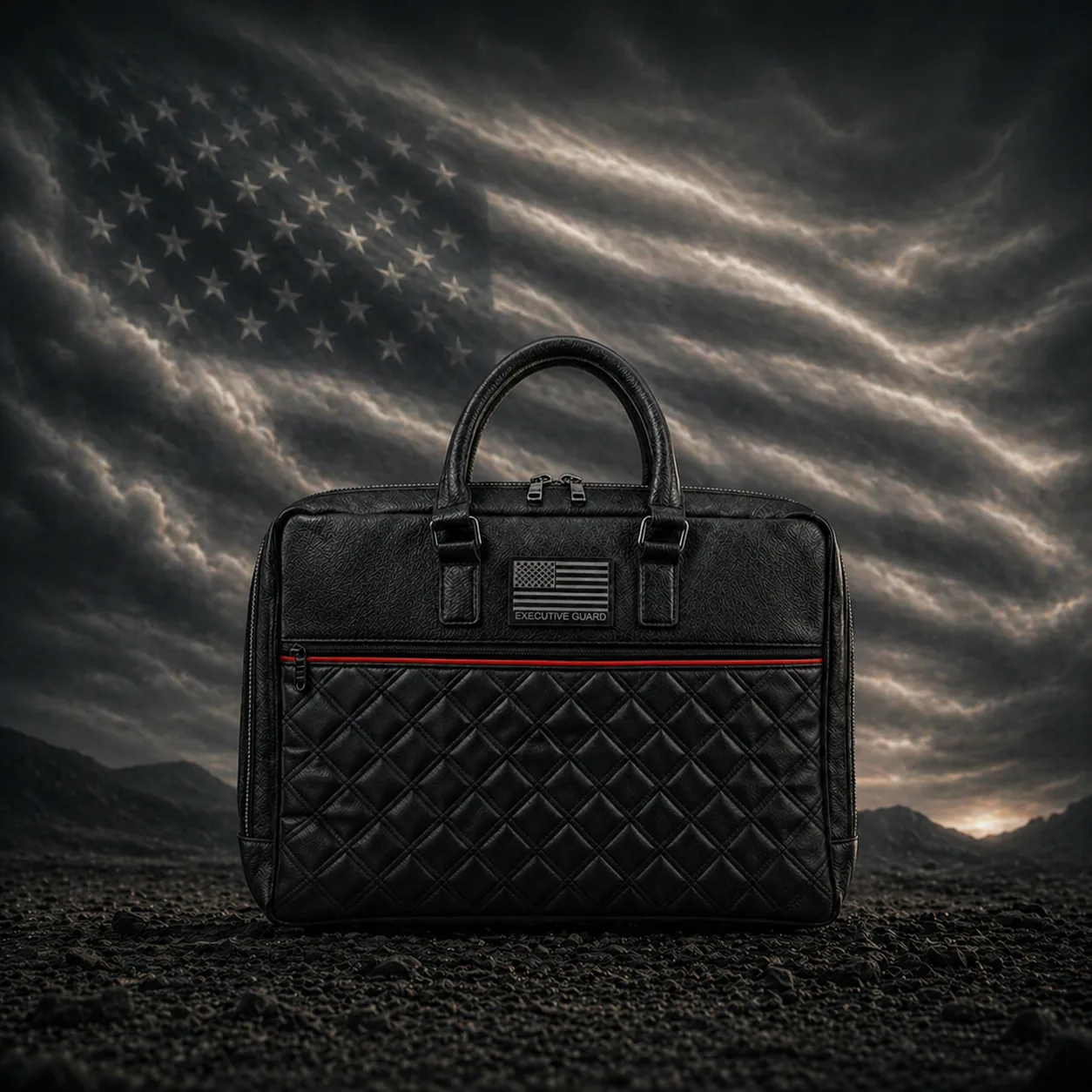
- Loadout review. Pre-stage a Faraday sleep bag, tamper-evident seals, a portable door alarm, and a USB data blocker. See our recommendations for the executive Faraday briefcase for a hardened daily-carry baseline.
In-Room Standard Operating Procedure
Execute the same sequence in every room, every night. Repetition prevents lapses.
Arrival sweep (10 minutes)
- Photograph the room from four corners on entry. These images become your tamper baseline.
- Inspect smoke detectors, lamps, alarm clocks, and HVAC vents for unusual additions. Look for fresh adhesive, new screws, or pinhole apertures.
- Unplug any USB chargers and HDMI adapters that did not arrive with you.
- Disable smart-TV microphones and cameras at the menu, or cover them physically.
Sleep configuration
- Power down laptops fully. Sleep mode preserves keys in RAM and is exploitable.
- Place laptop, phones, hardware tokens, RFID badges, and key fobs into a Faraday bag rated above 60 dB across cellular, Wi-Fi, Bluetooth, GPS, and UWB.
- Apply a numbered tamper-evident seal across the bag closure. Photograph the serial.
- Position the bag in a non-obvious location. Not the safe. Not the desk. Inside personal luggage closed with a TSA-resistant cable lock is acceptable.
- Deploy a portable door alarm or door-stop wedge alarm. Cost: $15. Effect: any 3 a.m. entry attempt becomes audible and disruptive.
Network discipline
- Never connect to hotel Wi-Fi without an always-on trusted VPN.
- Prefer cellular tethering from a known carrier SIM. Treat hotel Ethernet as hostile.
- Disable Bluetooth and Wi-Fi on devices when not actively in use.
Departure Checklist
The exit is when fatigue causes mistakes. Run a written checklist:
- Verify tamper seals against your photographed serials.
- Sweep all surfaces, drawers, the safe, the closet, the bathroom counter, and behind nightstands.
- Reboot devices and check for unexpected configuration changes, new profiles, or unknown MDM enrollment.
- On return, image the laptop and compare against your pre-trip baseline. Anomalies trigger device retirement, not patching.
Recommended Tools and Specifications
| Tool | Purpose | Minimum Spec |
|---|---|---|
| Faraday sleep bag | Overnight RF isolation of devices | ≥60 dB attenuation, 600 MHz–6 GHz |
| Tamper-evident seals | Detect physical access | Numbered, single-use, photo-logged |
| Portable door alarm | Intrusion alert during sleep | ≥110 dB, battery-monitored |
| USB data blocker | Safe charging from unknown ports | Data-pin physically severed |
| Hardware MFA token | Phishing-resistant authentication | FIDO2 / WebAuthn certified |
| Travel laptop | Reduced blast radius | Encrypted, Secure Boot, no production data |
For procurement and configuration guidance on shielded carry, review the Faraday Bags: The Complete Guide to Signal Blocking Protection or jump directly to our hardened EMP Protection: Safeguarding Electronics from Electromagnetic Threats options for principals operating in elevated-threat environments. Browse the full hardware lineup on the order page.
When the Threat Profile Escalates
Public figures, defense-industry executives, and counsel handling cross-border M&A operate above the consumer threat baseline. Indicators that justify upgraded posture: prior targeting attempts, travel into jurisdictions with documented hospitality-sector intelligence cooperation, or transit through events with concentrated principal density (Davos, COP, defense expos). In these contexts, devices never leave the principal, sleep occurs in rotated rooms, and a security advance team conducts the arrival sweep before the principal enters. The hotel safe stays empty. The Faraday bag stays sealed. The threat model dictates the protocol — not the comfort of routine.
Bottom Line
Hotel rooms cannot be secured. They can only be operated through. Assume access. Assume surveillance. Assume the safe is open. Then deploy layered controls — RF isolation, tamper evidence, intrusion alerts, network discipline, and a written departure checklist — until the residual risk fits your threat profile. The cost is twenty minutes per night. The alternative is a compromised principal, a compromised company, and a breach you will explain to a board that does not want to hear about housekeeping.