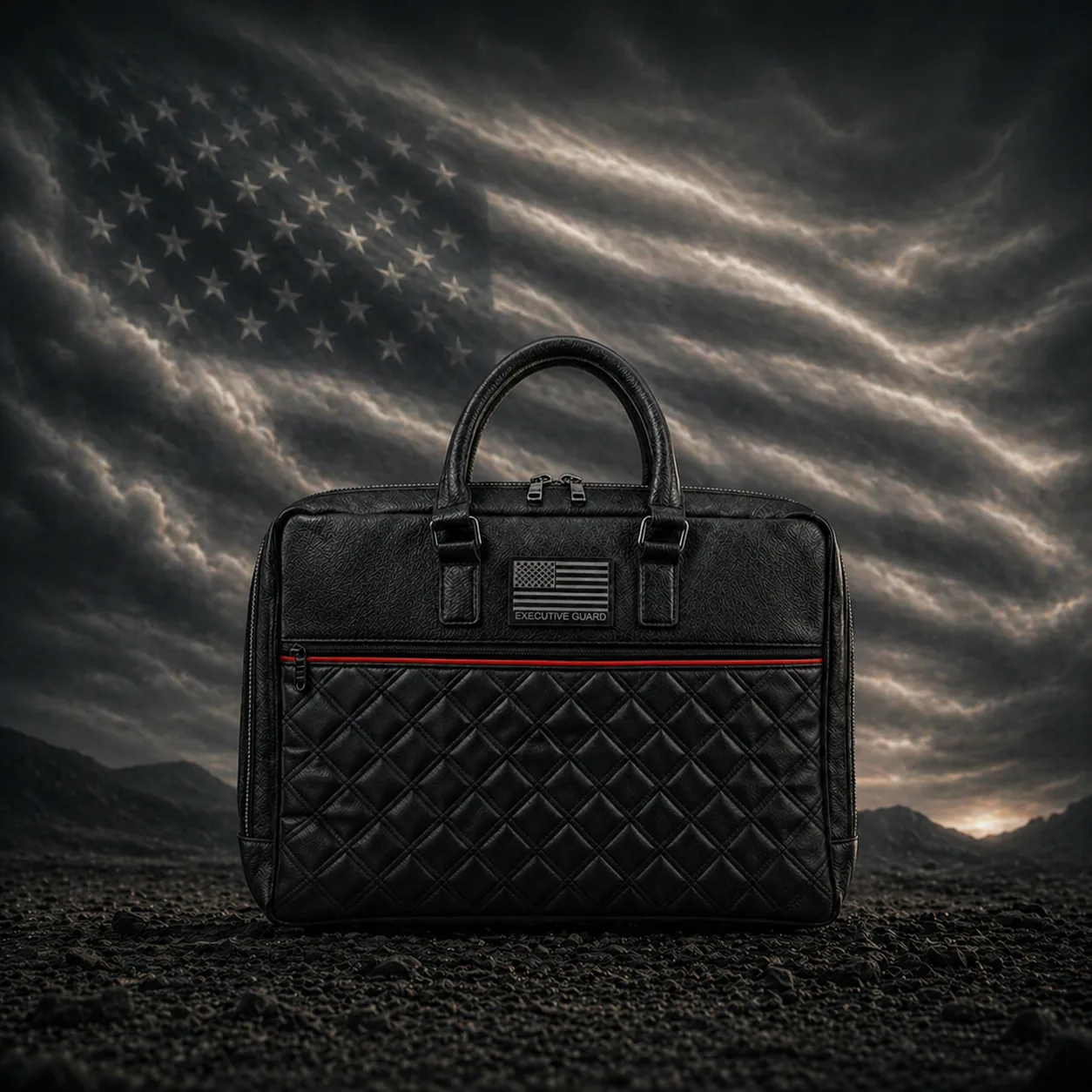
Are Faraday bags legal in all 50 U.S. states?
Yes. No federal license, no state permit, no registration. Civilians, executives, attorneys, family-office staff, and law-enforcement personnel may purchase and use them everywhere in the United States. The FBI, DEA, and CBP issue them as standard equipment — that official endorsement settles the question.
Can I bring a Faraday bag through TSA?
Yes. The bag itself is unrestricted. Electronics inside (laptop, phone, tablet) come out for separate screening like any other carry-on. The metallized lining looks opaque on X-ray — expect a possible secondary inspection on first-time travel, resolves in under two minutes once the agent verifies normal contents.
What about courthouses, federal buildings, or prisons?
Five specific settings restrict device-handling: courthouses (phones surrendered regardless of bag), federal SCIFs (devices left at check-in), correctional facilities (no Faraday bags through visitor entry), polygraph rooms (electronics out of room), and active TSA screening. The bag itself remains lawful to own; entry rules govern facility-specific use.
Is blocking AirTag, GPS, or cellular signals legal?
Yes — under U.S. law you have no obligation to broadcast your location. Faraday-blocking signals from your own devices is fully legal. Blocking signals from a tracker someone placed on you without consent is also legal — and the placement itself may be a federal crime under 18 U.S.C. § 2261A. Critical distinction: passive shielding (Faraday bag, always legal) is a different legal category from active jamming (transmits, illegal under 47 U.S.C. § 333).
Can businesses provide Faraday bags to employees?
Yes — and increasingly required by corporate-security policy. Finance firms, M&A counsel, healthcare-compliance teams, and intelligence-sensitive industries issue them as standard equipment. Custom-branded bulk procurement for EP firms and SOC teams is routine. The REVIS-1
/business program supports custom-branded bulk orders with net-30 invoicing.
Why does this question come up so often?
Two reasons. (1) The technology sounds adversarial — "blocking signals" triggers a legality reflex even though microwave-oven doors and Mylar emergency blankets do the same thing. (2) Active signal jammers ARE illegal under 47 CFR § 2.803, and product confusion between active jammers and passive Faraday bags drives the question. They're different legal categories. Faraday bags transmit nothing; the FCC has no jurisdiction.